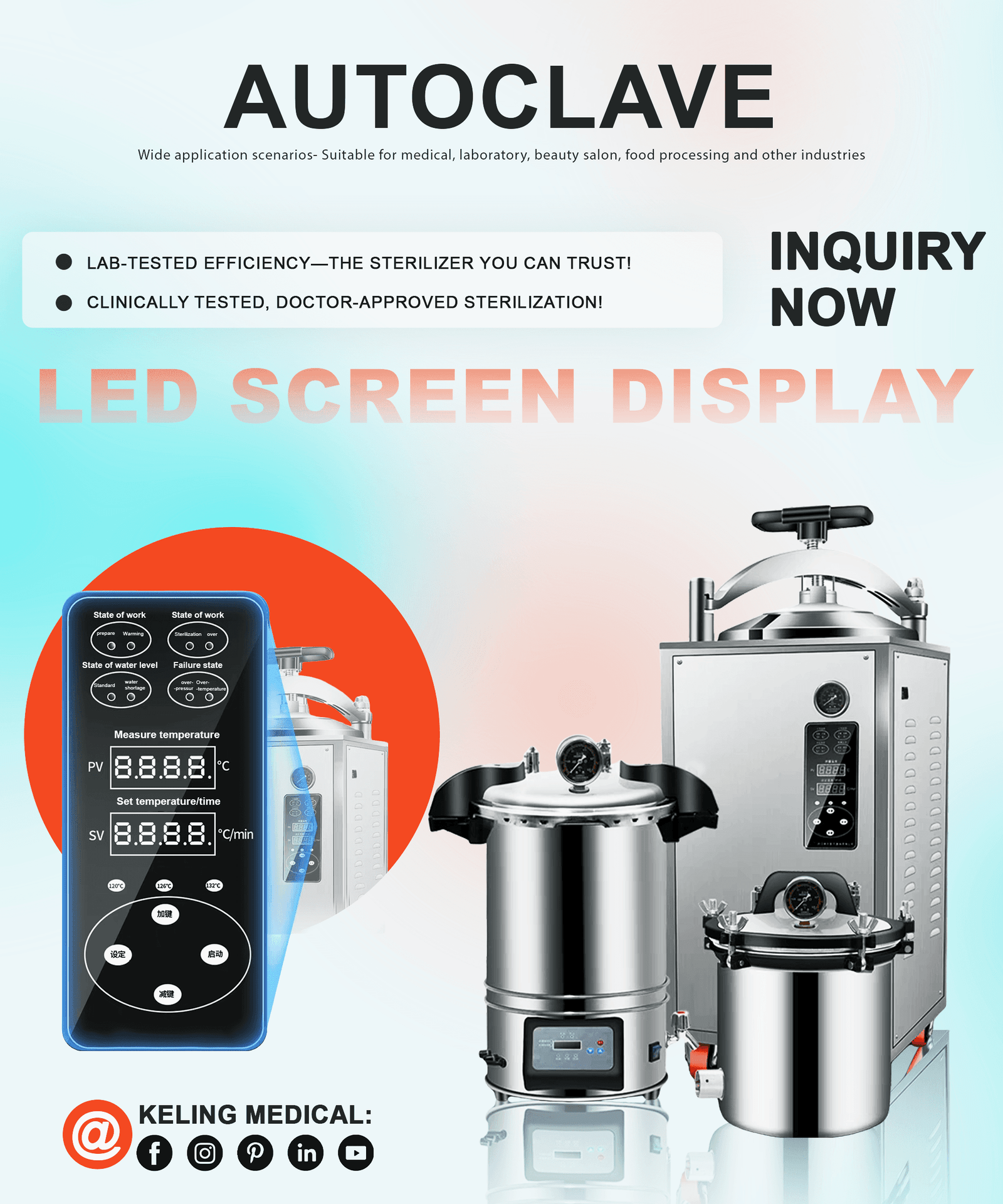
The success of plant tissue culture relies on autoclaves to sterilize all lab materials including growth media tools and containers. Autoclaves create sterile conditions that remove contaminants and enable healthy plant tissue development.
This article examines how sterilization is essential in tissue culture and demonstrates the role of autoclaves in this process along with their benefits for advancing agricultural technology.
Plant tissue culture involves growing plants in controlled laboratory conditions by placing small sections of plant material known as explants into a sterile environment enriched with nutrients. This technique is widely used for:
Propagating plants on a large scale.
Producing disease-free plants.
Conserving rare or endangered plant species.
Developing genetically modified plants.
A sterile environment is vital to tissue culture success because contamination from bacteria and fungi can damage plant tissue or interfere with its growth.
Sterilization forms the essential foundation of plant tissue culture as it guarantees all materials and instruments remain uncontaminated. Without proper sterilization:
The nutrient-rich culture media provides bacteria and fungi with ideal conditions for rapid multiplication which damages plant growth.
Contaminants in tissue culture can either starve plant tissues by competing for essential nutrients or produce harmful toxins that damage the explant.
The presence of contaminants in cultures requires disposal which results in the loss of both materials and time.
The most dependable and effective sterilization technique for tissue culture success is provided by autoclaves.
This section explains the sterilization process of culture media, tools, and containers through autoclaves.
Microorganisms thrive in tissue culture growth media because it contains abundant nutrients. Autoclaves sterilize the medium by:
The autoclave heats the contents to reach temperatures between 121°C and 134°C.
The process utilizes high-pressure steam to destroy bacteria, fungi, and spores.
The sterilization process guarantees that the culture media remains free from all microorganisms before it is used.
The routine use of scalpels, forceps, and pipettes in tissue culture necessitates their sterilization to avoid contamination. Autoclaves effectively sterilize these tools by:
Penetrating all surfaces with high-pressure steam.
Autoclaves remove microorganisms from difficult-to-access areas to ensure complete sterilization.
Petri dishes along with test tubes and flasks serve as necessary vessels for maintaining both culture media and plant tissues. Autoclaves sterilize these containers by:
The sterilization process removes every microorganism from both the surfaces and interiors of the containers.
Preventing contamination during the culture process.
Autoclaves maintain a completely sterile environment for plant tissue culture by sterilizing culture media, tools, and containers.
Autoclaves remove every type of microorganism such as bacteria, fungi, and spores to maintain contamination-free tissue culture processes. Successful plant propagation depends on these critical factors.
Plant tissues thrive in sterile settings because harmful microorganisms do not compete for resources. The result is robust plant development together with improved tissue culture success rates.
Autoclaves offer a quick and dependable sterilization option which reduces processing time in contrast to chemical sterilization methods. Autoclaves enable cost savings through lowered contamination risk which reduces the necessity of discarding non-viable cultures.
Commercial agriculture depends on tissue culture to propagate crops at a large scale. Autoclaves deliver uniform sterilization which enables large volume plant production to be both efficient and dependable.
Various crops can be propagated through tissue culture including bananas, orchids, potatoes, strawberries, and sugarcane.
Plant tissue culture serves as a common method for propagating multiple crop species.
Bananas: To produce disease-free planting material.
Orchids are cultivated on a commercial scale for their ornamental value using plant tissue culture techniques.
Potatoes: For seed production and disease-free propagation.
Strawberries require tissue culture techniques to develop superior plants intended for commercial agriculture.
Sugarcane: For rapid multiplication of planting material.
The sterile environment generated by autoclaves enables healthy and uniform growth of these crops.
Autoclaves serve as vital equipment in plant tissue culture through their ability to create sterile conditions which facilitate successful propagation. Autoclaves eliminate contaminants from culture media and tools as well as containers which results in healthy plant development and assists the large-scale farming industry.
Agricultural equipment distributors and buyers can achieve innovation and sustainable agricultural practices by investing in autoclaves.
Reach out to us today for information on how autoclaves can improve your tissue culture process.
Sterilization is critical in plant tissue culture to prevent contamination by microorganisms, which can harm plant tissues and compromise the success of the process.
Autoclaves use high-pressure steam at temperatures between 121°C and 134°C to eliminate microorganisms, ensuring all materials are completely sterile.
Crops such as bananas, orchids, potatoes, strawberries, and sugarcane are commonly propagated through tissue culture due to the benefits of disease-free and uniform plant production.
Yes, autoclaves are available in various sizes and capacities, making them suitable for both small-scale and large-scale tissue culture operations.
You can purchase high-quality autoclaves from Keling Medical. Contact us via email at inquiry@shkeling.com, WhatsApp at +8618221822482, or visit our website at https://autoclaveequipment.com/.
For more information about autoclaves and their applications, contact us today:
Email: inquiry@shkeling.com
WhatsApp: +8618221822482
Website: https://autoclaveequipment.com/
Let us help you find the perfect autoclave solution for your agricultural needs!
Tại sao phải tiệt trùng bằng autoclave ở 121°C?
Tại sao tiệt trùng bằng autoclave là phương pháp tiệt trùng tốt nhất?
Tại sao nhiệt độ của máy tiệt trùng là 121°C?
Ai chịu trách nhiệm về việc xác nhận tiệt trùng bằng autoclave?