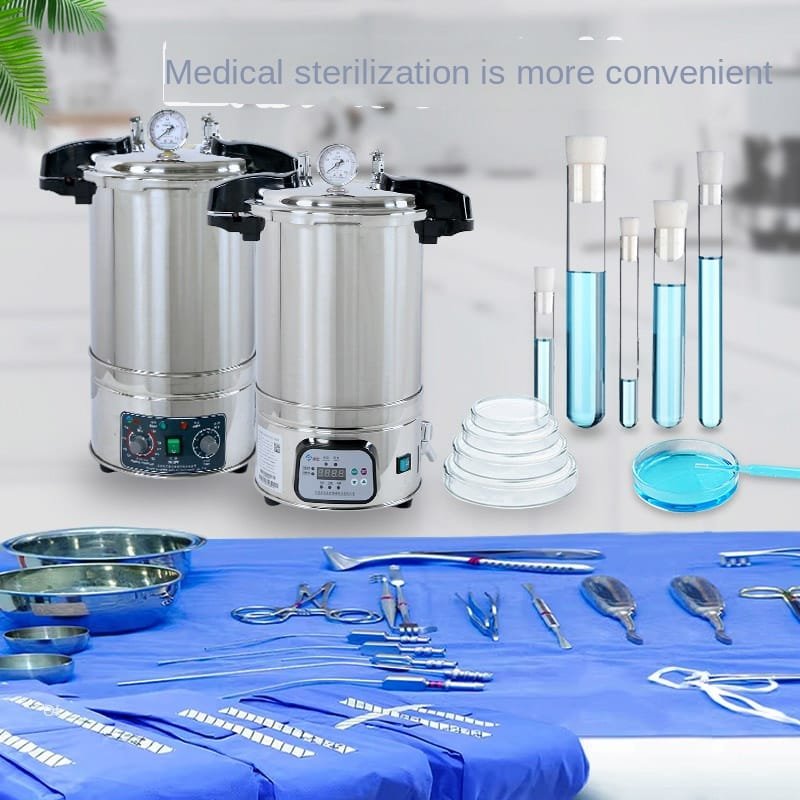
By utilizing high-pressure saturated steam to destroy microorganisms, autoclaves become essential for the sterilization process of surgical instruments, implants, and laboratory equipment. Medical-grade sterilization for sensitive devices is achieved through a process that follows both ISO 17665 and FDA guidelines.
Key Applications:
Sterilizing reusable surgical instruments
Decontaminating single-use device packaging
Ensuring biocompatibility of implants
Different workflows demand specialized solutions:
a. Gravity Displacement Autoclaves These systems use steam to remove air from the chamber making them suitable for sterilizing unwrapped instruments.
b. Pre-Vacuum Autoclaves Pre-Vacuum Autoclaves are designed to sterilize porous materials such as textiles by first evacuating air from the chamber using vacuum technology which makes them ideal for hospital steam sterilizer operations.
c. Tabletop Autoclaves Small clinics and labs can use these compact sterilization units for medical device sterilization needs.
Distributors must prioritize:
The autoclave offers customizable cycles through adjustable pressure settings, temperature controls and drying time durations.
Compliance: CE, ISO 13485, and FDA certifications.
Durability: Stainless steel chambers resistant to corrosion.
Pro Tip: Autoclave systems with automated data logging capabilities help streamline compliance auditing processes.
Collaborating with trusted suppliers ensures:
Autoclaves with <1% annual failure rates provide reliable operation and lower downtime.
Operational expenses can decrease by up to 30% through energy-efficient design choices.
Scalability: Modular systems for high-volume sterilization needs.
Problem: Inconsistent sterilization due to poor steam quality. Solution: Autoclaves equipped with integrated steam purity sensors along with water filtration systems.
Problem: Regulatory delays from non-compliance. Solution: Partner with manufacturers offering validation support (IQ/OQ/PQ).
The selection of appropriate autoclave equipment determines your capability to manufacture safe medical devices that meet compliance standards. Distributors can improve their supply chain reliability while building healthcare provider trust through the use of advanced features and manufacturer certifications along with expert knowledge.
Q1: What’s the difference between industrial and laboratory autoclaves? Industrial models handle larger loads (e.g., 1,000L chambers) and continuous operation, while lab units focus on precision for small batches.
Q2: How often should autoclaves be maintained? Bi-annual professional servicing is recommended for medical-grade autoclave machines, alongside daily self-checks.
Q3: Can autoclaves sterilize heat-sensitive devices? Yes—low-temperature models using ethylene oxide or hydrogen peroxide are available.
Ready to upgrade your sterilization capabilities? Reach out to Keling Medical’s experts today:
Thư điện tử: inquiry@shkeling.com
WhatsApp: +86 182 2182 2482
Website: https://autoclaveequipment.com/
We specialize in customized autoclave solutions for medical device suppliers—let’s optimize your sterilization workflow!
Tại sao phải tiệt trùng bằng autoclave ở 121°C?
Tại sao tiệt trùng bằng autoclave là phương pháp tiệt trùng tốt nhất?
Tại sao nhiệt độ của máy tiệt trùng là 121°C?
Ai chịu trách nhiệm về việc xác nhận tiệt trùng bằng autoclave?