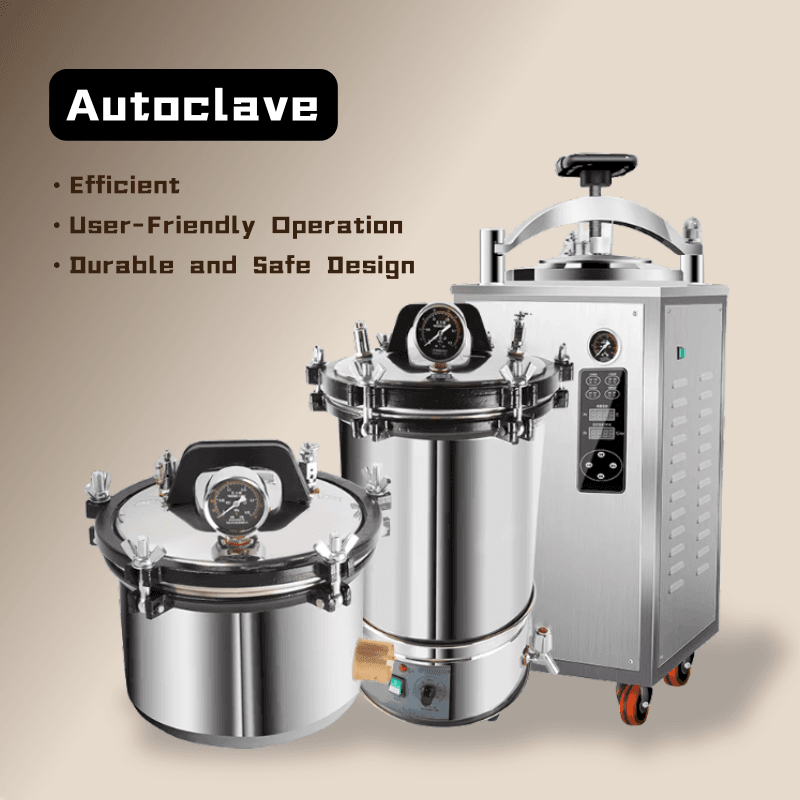
The article examines how laboratory autoclaves perform essential functions such as sterilizing glassware and culture media preparation along with laboratory waste management. The article also emphasizes unique applications of autoclaves in pharmaceutical laboratories as well as various other industrial sectors. You will acquire complete knowledge about laboratory autoclave applications across various settings by the end.
For inquiries about high-quality autoclaves, reach out to us at inquiry@shkeling.com, WhatsApp us at +8618221822482, or visit our website at autoclaveequipment.com.
The primary function of autoclaves in laboratories is sterilizing reusable items such as glassware and instruments.
The sterilization process eliminates contamination by effectively removing bacteria, viruses, fungi, and spores from reusable items.
Sterile tools eliminate contamination risks and maintain experiment and test result accuracy.
Meets necessary safety and regulatory standards for laboratory procedures.
Glass beakers, flasks, and test tubes.
Surgical instruments and metal tools.
Rubber stoppers and surgical gloves qualify as porous materials suitable for sterilization when their compatibility criteria are met.
The application of high-pressure steam enables complete sterilization by contacting every surface of the items being processed.
Users can program modern autoclaves to perform different sterilization cycles tailored for each type of material they process.
Reduced costs by reusing sterilized items.
Enhanced safety and hygiene in laboratory environments.
Research laboratories and microbiology labs commonly use autoclaves to prepare their culture media.
Creates sterile conditions required for microorganism development.
Accurate experimental data depends on uncontaminated media because contamination leads to false results.
In preparation, researchers combine the media ingredients before placing them into containers such as flasks or Petri dishes.
Autoclaves utilize high-pressure steam to eradicate contaminants during the sterilization of culture media.
Media needs sterile conditions during the cooling phase to avoid contamination risks.
Cultivating bacterial samples serves both scientific research and clinical diagnostic needs.
Preparing agar plates for microbiological studies.
Cell culture experiments require liquid media to be sterilized before use.
Uniform sterilization ensures consistent results.
The method minimizes contamination possibilities throughout the media preparation process.
Laboratory-generated waste encompasses biohazardous materials that must be sterilized appropriately before disposal.
Biohazardous Waste contains contaminated gloves, pipettes, and culture plates.
Sharps Waste encompasses items like needles and scalpels along with other sharp items.
The category of liquid waste includes fluids that are tainted with substances from culture media or chemical reagents.
Autoclave-safe bags or containers receive waste for treatment.
Autoclave sterilization eliminates pathogens and harmful microorganisms through high-pressure steam.
Laboratories dispose of sterilized waste by treating it as non-hazardous material.
The autoclave ensures laboratory personnel and environmental safety by eliminating biohazard risks.
The system fulfills all necessary local and international regulations for waste management practices.
The efficient operation of the system eliminates the necessity for outside waste treatment services.
Autoclaves serve essential functions in specialized laboratory environments especially in pharmaceutical and industrial applications.
Autoclaves provide sterilization for production equipment and storage containers.
The preparation of injectable products maintains the sterility of liquid medications and injection solutions.
Pharmaceutical manufacturing processes adhere to strict regulatory standards through compliance.
Quality control testing employs high-pressure steam to evaluate material durability in industrial laboratories.
Sterilizing production components maintains a contamination-free environment for food and beverage production industries.
The development phase requires sterilizing both new materials and components during prototyping.
Researchers utilize autoclaves in biotechnology and nanotechnology fields to sterilize sophisticated equipment.
Precision together with reliability enables adherence to established industry standards.
Programmable cycles within advanced features enable effective sterilization for complicated requirements.
Laboratory autoclaves are versatile tools with applications that span sterilizing glassware, preparing culture media, managing laboratory waste, and supporting specialized industries like pharmaceuticals. For medical equipment distributors and procurement specialists, understanding these applications is essential to recommend the right autoclave solutions to clients.
By investing in a reliable autoclave, laboratories can enhance efficiency, ensure safety, and comply with regulatory standards.
If you’re looking for high-quality autoclaves tailored to your laboratory’s needs, contact us today at inquiry@shkeling.com, WhatsApp us at +8618221822482, or visit our website at autoclaveequipment.com.
Laboratory autoclaves are primarily used for sterilizing reusable items like glassware, instruments, and culture media to ensure a contamination-free environment.
Yes, autoclaves are highly effective in sterilizing biohazardous waste, including contaminated gloves, culture plates, and liquid waste, before disposal.
Absolutely. Autoclaves are essential in pharmaceutical labs for sterilizing equipment, preparing injectable products, and ensuring compliance with regulatory standards.
Autoclaves sterilize culture media by eliminating contaminants, ensuring that the media is suitable for growing microorganisms in research and diagnostics.
Autoclaves neutralize pathogens in laboratory waste, ensuring safety, compliance with regulations, and reduced reliance on external waste treatment services.
For more information or to inquire about laboratory autoclaves, contact us at inquiry@shkeling.com, WhatsApp us at +8618221822482, or visit our website at autoclaveequipment.com.
Tại sao phải tiệt trùng bằng autoclave ở 121°C?
Tại sao tiệt trùng bằng autoclave là phương pháp tiệt trùng tốt nhất?
Tại sao nhiệt độ của máy tiệt trùng là 121°C?
Ai chịu trách nhiệm về việc xác nhận tiệt trùng bằng autoclave?